From Handshake to House Rules: How Shared-Living Customs Took Shape
Shared-living customs shape how people share a home. Learn when a ritual, signal, or shared object can coordinate daily life without turning it into policy.
Shared-living customs often begin beside the kitchen sink: one person leaves a mug upside down on a towel, and the others learn that the sink is needed. The question behind shared-living customs is not always whether to write house rules; sometimes it is how a household can coordinate without making every habit a policy.
A familiar gesture, a particular place for things, or a recurring way of making room for one another can carry meaning. These practices can make a home feel inhabited by people rather than managed by a rulebook, provided everyone can question or change them without embarrassment.
Rituals In Daily Life
A custom can be physical and quiet: leaving the hallway clear for a stroller, putting the kettle back on its base, or turning a lamp toward the couch when someone is working late. Unlike a rule, it may not be stated at all. Its meaning develops through repetition and the way other residents respond.
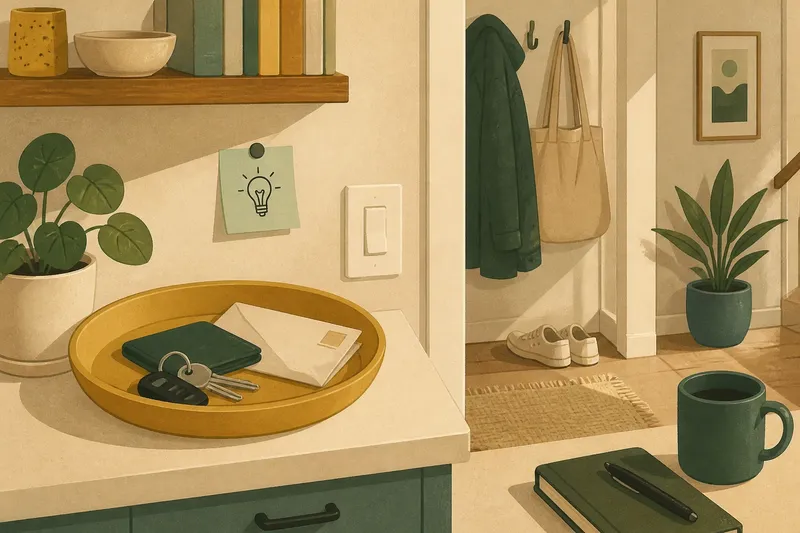
Shared objects can help a custom take hold. A bowl by the door might collect keys, a tray on the counter might signal that food there is for everyone, or a colored magnet on the refrigerator might mark a shelf as reserved. These cues work when residents agree on what they mean; otherwise, they are decoration that invites guesswork.
Rituals can also mark transitions between private and shared time. A housemate might close the living-room door during a call or place a book on the table to signal a quiet evening. The value lies less in the object than in the mutual understanding around it.
Choose a cue that is easy to notice and easy to ignore when circumstances change.
Signals Without Surveillance
Informal coordination has a boundary: a cue should help people share space, not monitor one another. A note on a door saying “on a call” communicates a temporary need. A hidden system for tracking when someone uses the kitchen would turn an ordinary routine into oversight.
Good signals are voluntary, specific, and limited in scope. They tell housemates what they need to know without demanding an explanation of private choices. If a cue starts to feel like a test of loyalty or obedience, residents can discuss its purpose and replace it with a direct request.
Imagine, as an invented situation, that three housemates often arrive home at different times and the hallway light bothers one person who sleeps early. They agree to leave a small note beside the switch when someone needs the light kept low, and each person turns on the kitchen light instead when coming in. The observable result they expect is a darker hallway on those evenings without asking anyone to report their schedule.
Reading Household Customs
Before treating a repeated action as a shared custom, check whether people actually interpret it alike. An empty dish on the counter might mean “help yourself,” “save this for later,” or simply “I have not put it away.” Ask plainly rather than assigning meaning on another person’s behalf.
These checks can help distinguish a useful ritual from a misunderstood habit:
- Shared object: Check whether everyone knows what the bowl, tray, or shelf is for; if meanings differ, agree on a simple use or choose another place.
- Repeated gesture: Check whether each resident recognizes the signal; if someone misses it, explain it directly or use a more visible cue.
- Turn-taking: Check whether residents can tell whose turn comes next; if the order is unclear, choose a simple rotation or take turns by need.
- Private space: Check whether a custom reaches into a bedroom or personal belongings; if it does, keep the practice within shared areas unless the person affected agrees otherwise.
- Unpaid effort: Check who keeps the ritual going; if one person alone remembers or resets it, share the task or let the custom go.
- Changing need: Check whether the cue still suits current routines; if it no longer helps, discuss a replacement or stop using it.
A custom does not have to be written down to be real, but it should be understandable to the people expected to follow it.
When Does A Custom Need Words?
Can a household custom work without explanation?
Yes, if residents understand it in much the same way and can ask questions comfortably. When a cue repeatedly causes confusion, a short conversation can clarify what it means without turning it into a formal rule.
How can housemates create a shared signal?
Start with a specific need, such as keeping a room quiet during a call, and agree on a visible cue that does not reveal more than necessary. Say what action the cue asks for and what residents should do if they cannot follow it.
What if a household ritual feels unfair?
Name the burden or boundary it creates and ask whether everyone has the same choice about participating. If one resident carries all the remembering or upkeep, change the practice, share that work, or stop relying on the ritual.
Can a household keep some customs private?
Yes. A resident can maintain personal routines in private space, while customs involving shared rooms or shared belongings need to respect the people who use them. If a lease or building policy bears on the arrangement, consult the relevant source rather than relying on a household signal.
Keeping Room For Change
Picture an invented household where a bowl near the entrance has gradually become the place for everyone’s mail. One resident needs a clear surface for groceries, so the housemates move the bowl to a wall shelf, agree that each person collects their own mail when passing, and leave parcels on the floor beside it. The expected observable result is a clear counter and a shared place to look for deliveries; if the shelf proves inconvenient, they can choose another spot together.
That kind of adjustment is not a failure of custom. It shows that a household can preserve a useful gesture while changing its form. A written rule may still suit arrangements that need precision, especially where a lease, safety concern, or recurring responsibility is involved; seek qualified guidance when the matter calls for it.
For everyday shared-living customs, begin with the smallest cue that communicates the need and leaves room for a person to respond. A habit that stays humane is one residents can question, adapt, or quietly retire.